The Intercontinental Indianapolis
Indianapolis, Indiana
- Hospitality
S. News & World Report – #5 in Best Indianapolis Hotel
Conde Nast Traveler: #14 in Top 15 Hotels in the Midwest
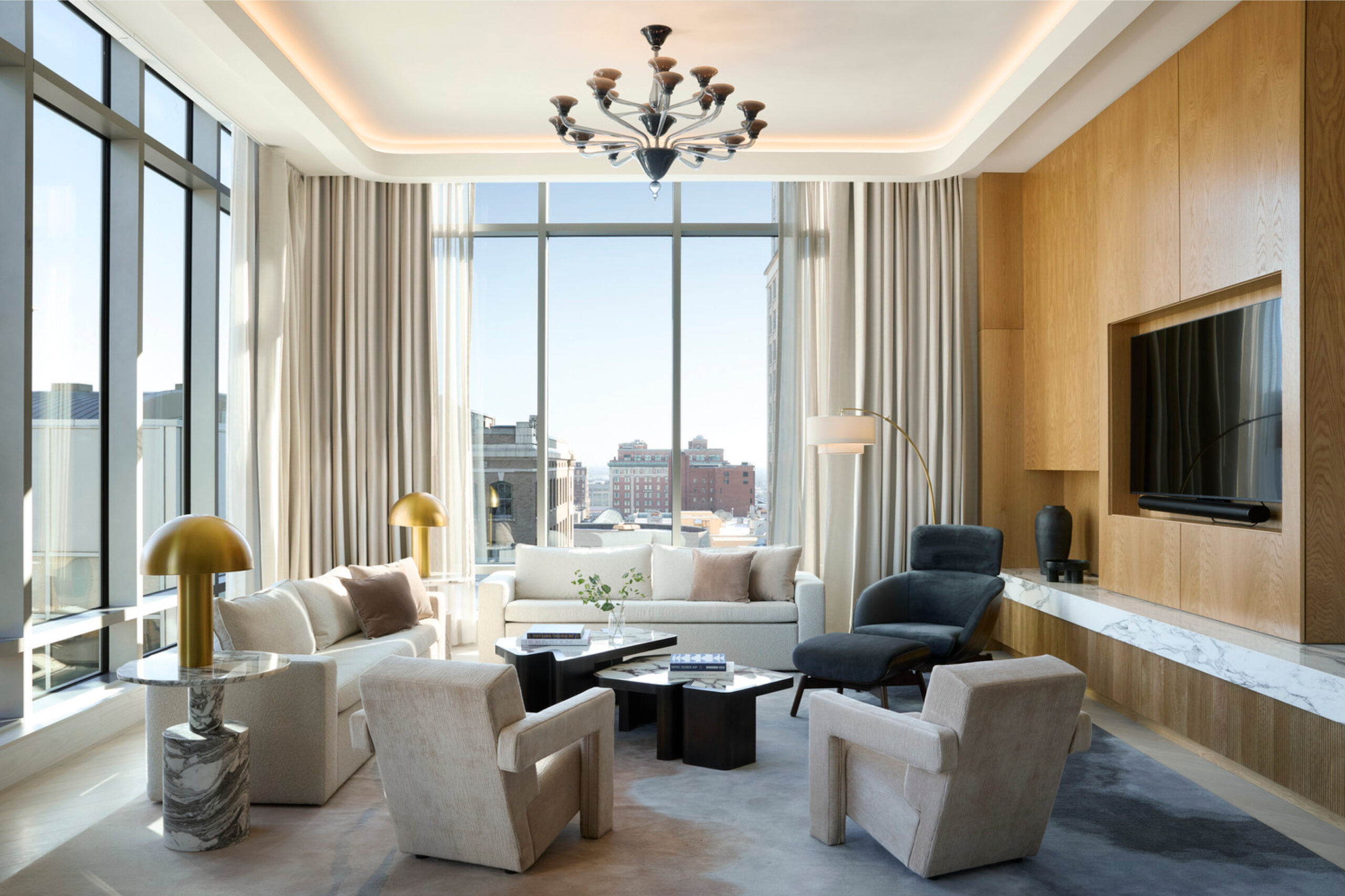
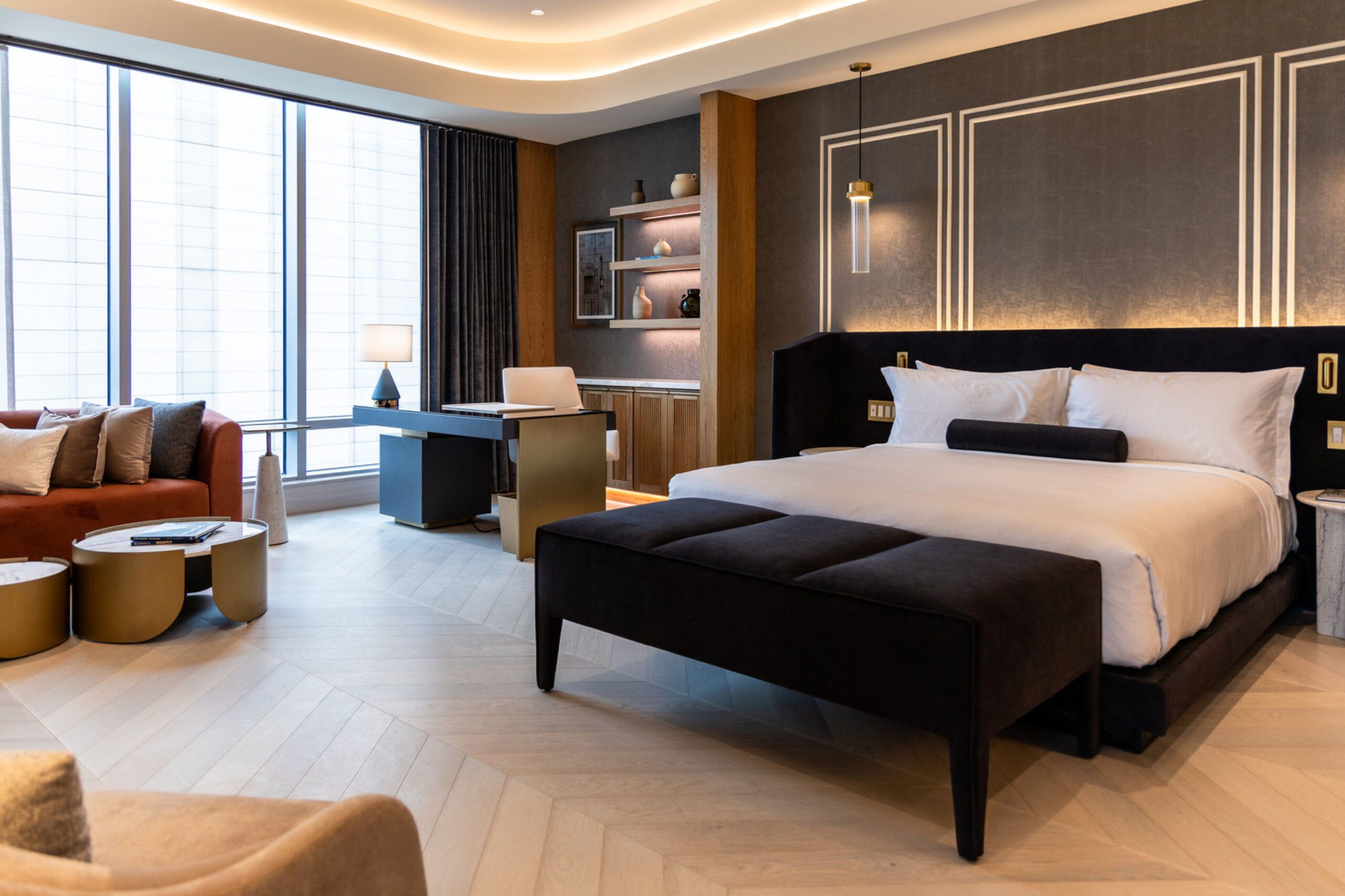
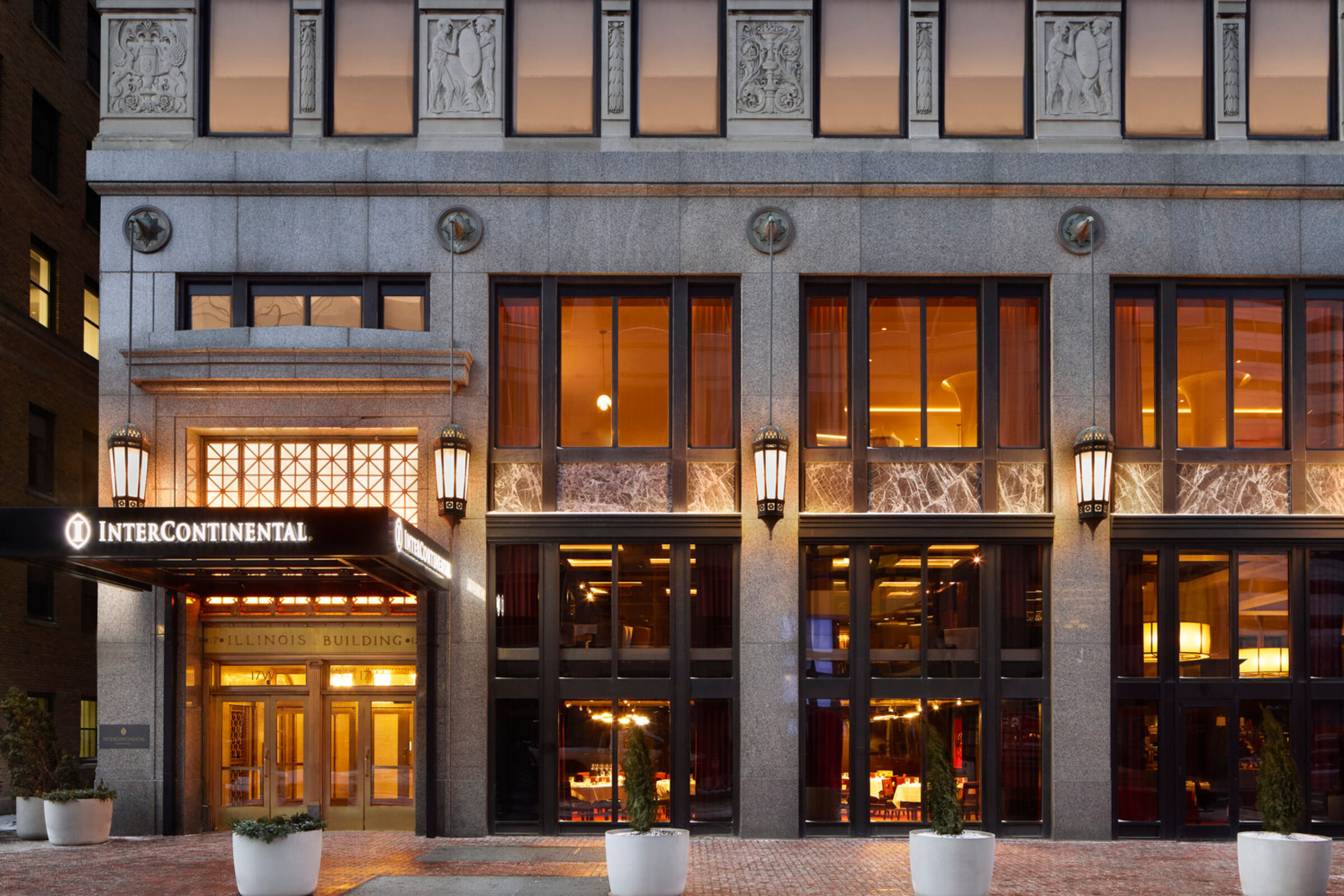
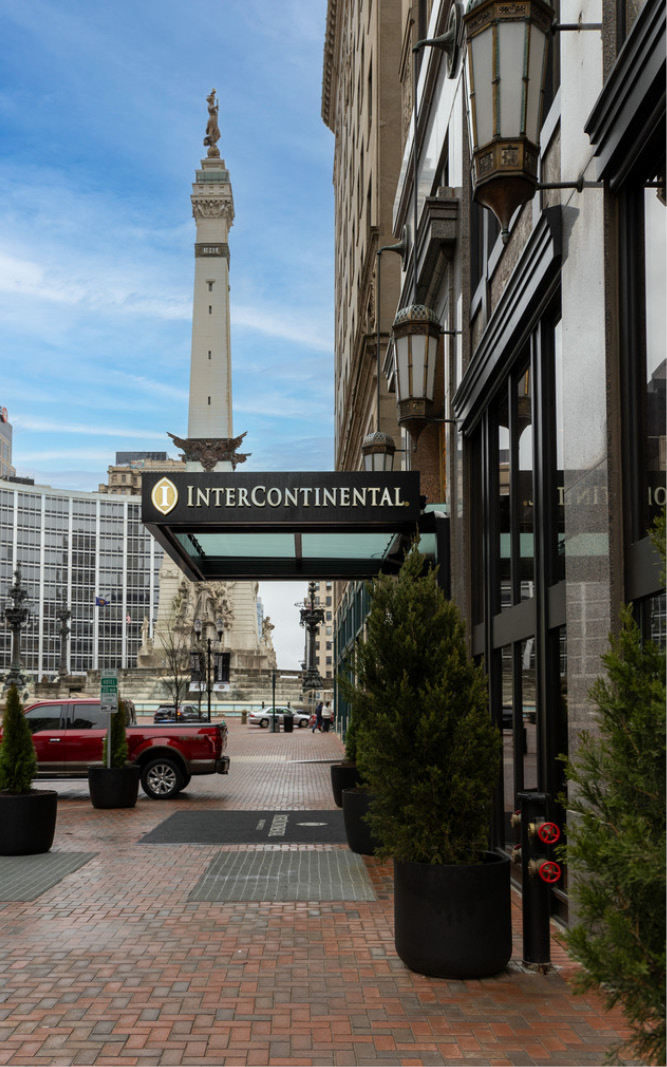
The InterContinental Indianapolis transforms a 1926 Neo-Classical landmark into a series of immersive hospitality environments, where dining and social spaces become the primary expression of the building’s renewal. Located at the heart of the city’s Mile Square, the project builds upon the architectural legacy of the historic Illinois Building while introducing a contemporary layer of experience-driven interiors.
Within the Monument Circle Historic District
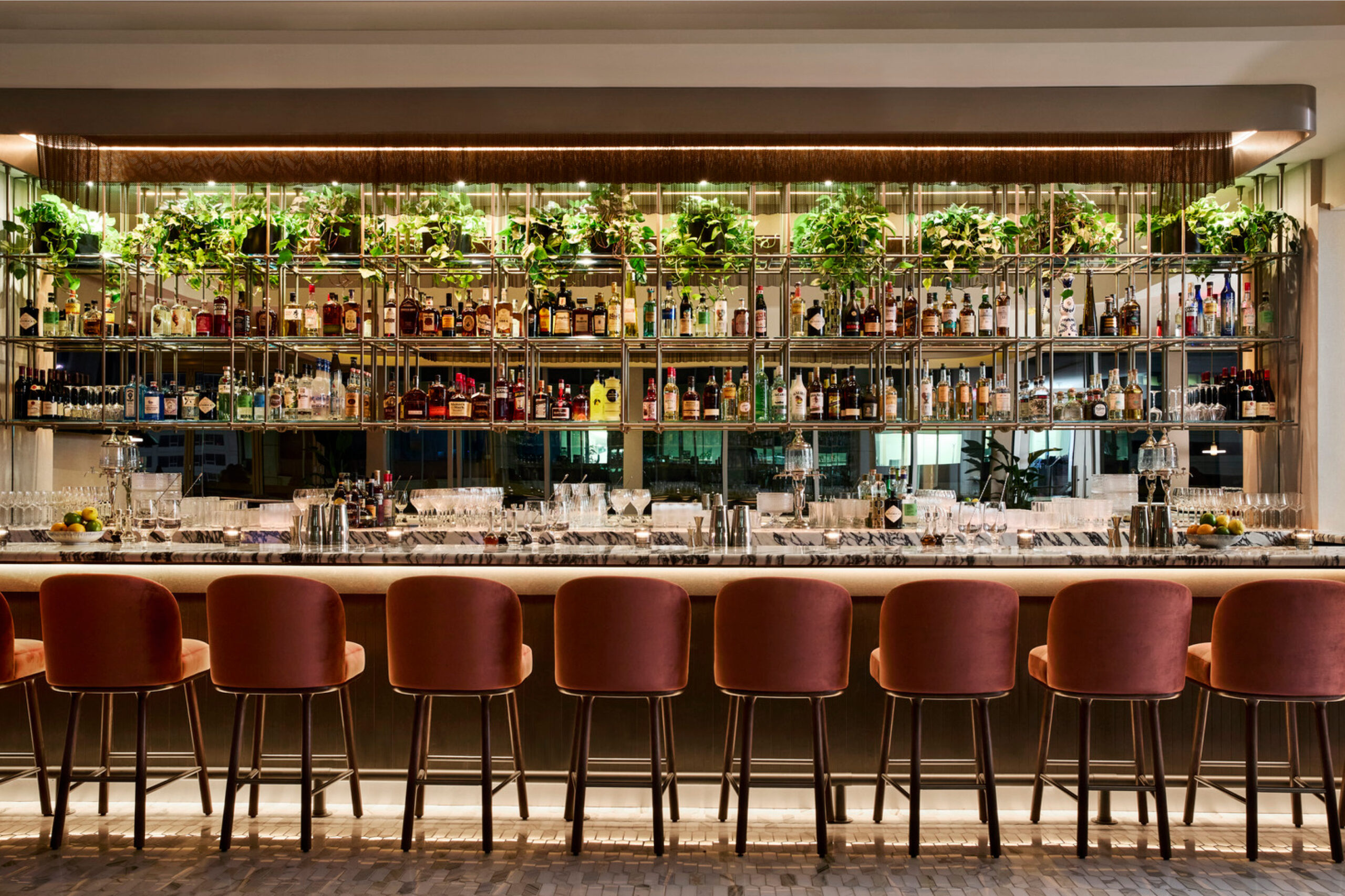
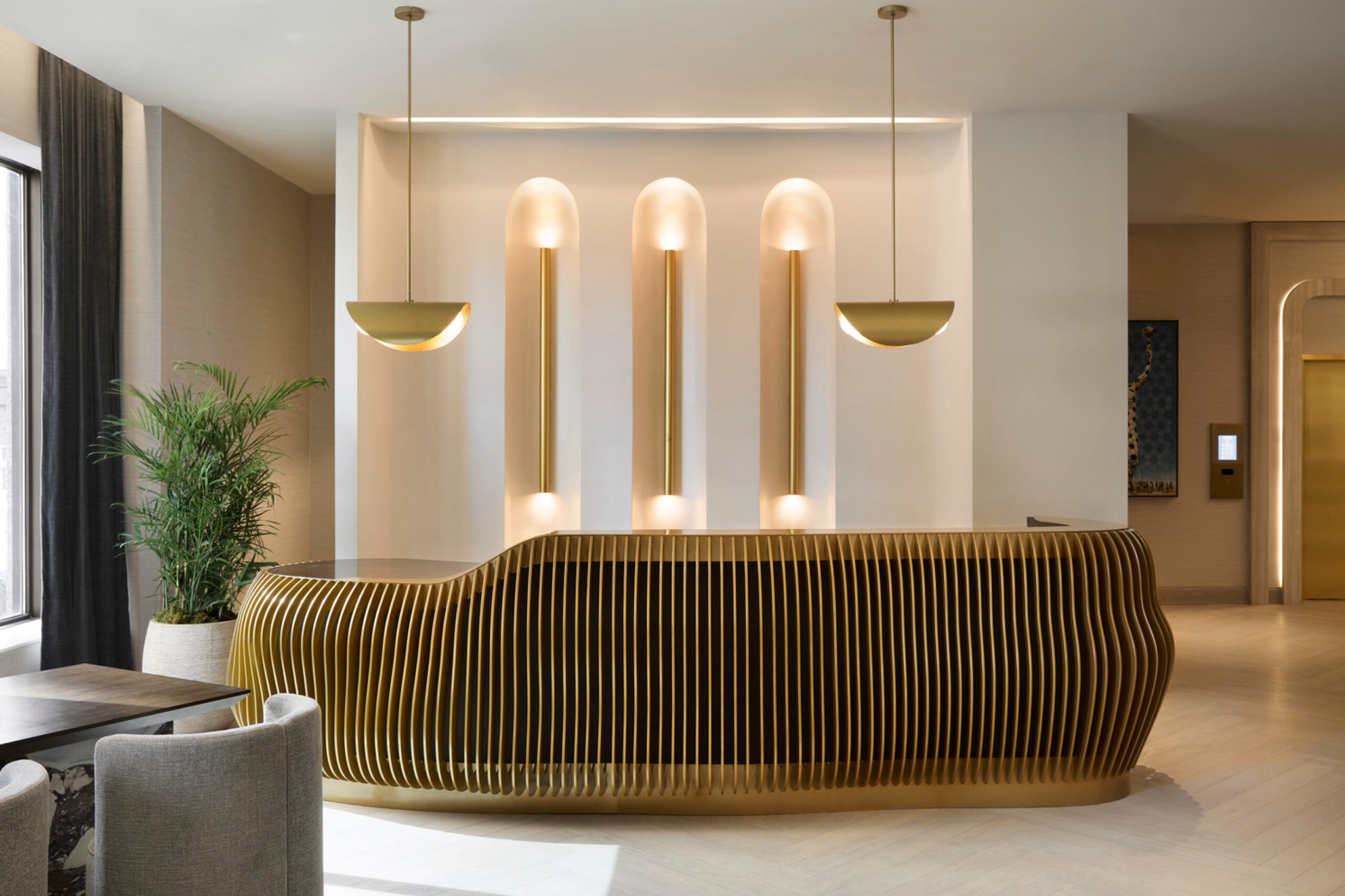
Within this framework, the hotel’s restaurant and bar spaces are conceived as distinct yet connected moments of arrival, gathering, and retreat. At the second level, Serliana extends the ceremonial sequence of entry and transitions seamlessly from morning café to afternoon meeting space to evening bar. Curved forms, fluted columns, and luminous finishes reinterpret classical motifs, creating an atmosphere that feels both rooted in history and distinctly contemporary.
Programming reinforces this spatial flexibility. A curated food and beverage experience, from locally sourced coffee and light fare to cocktails and weekend afternoon tea, encourages repeat visitation and establishes the space as an everyday destination within the city.
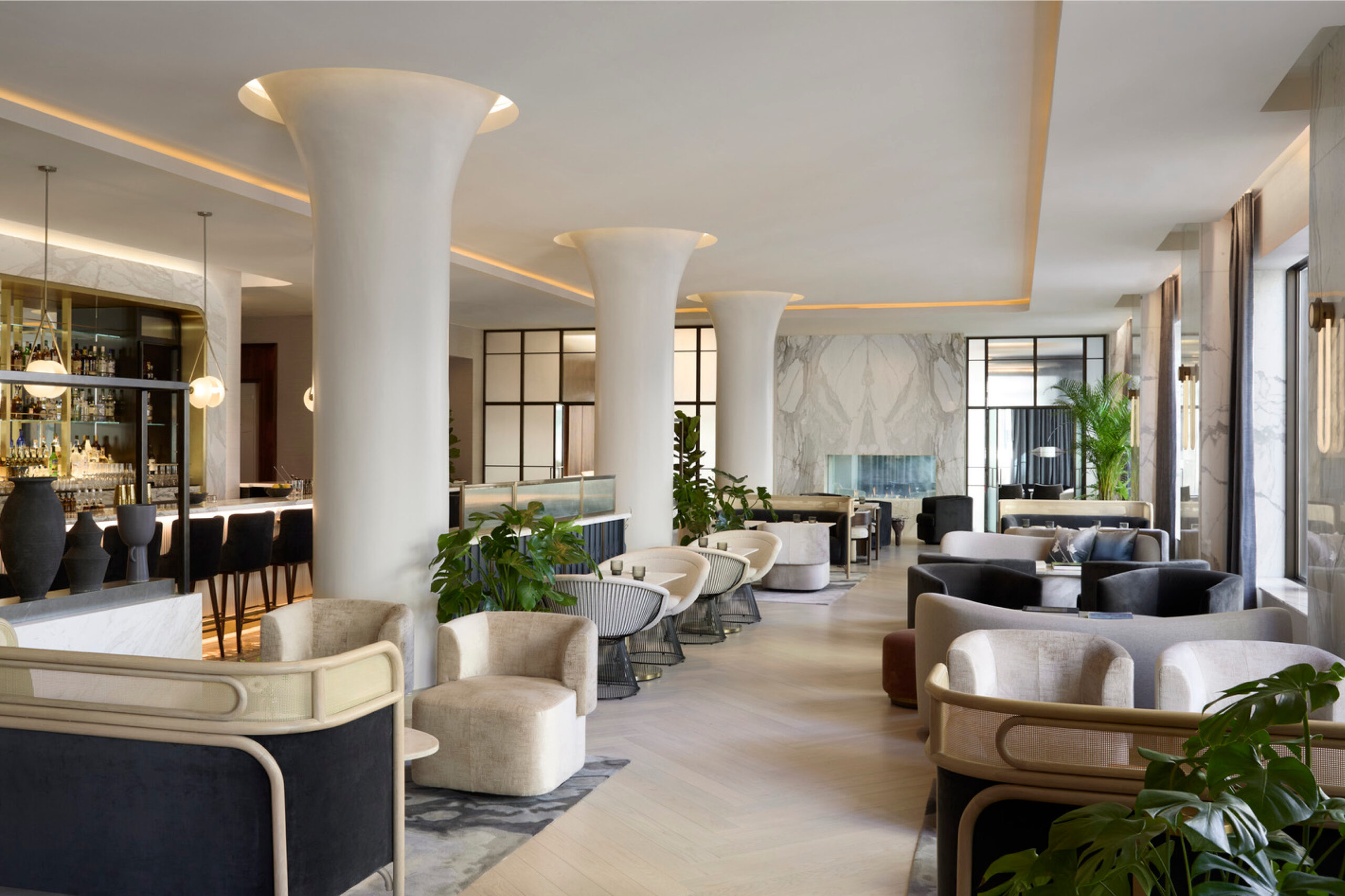
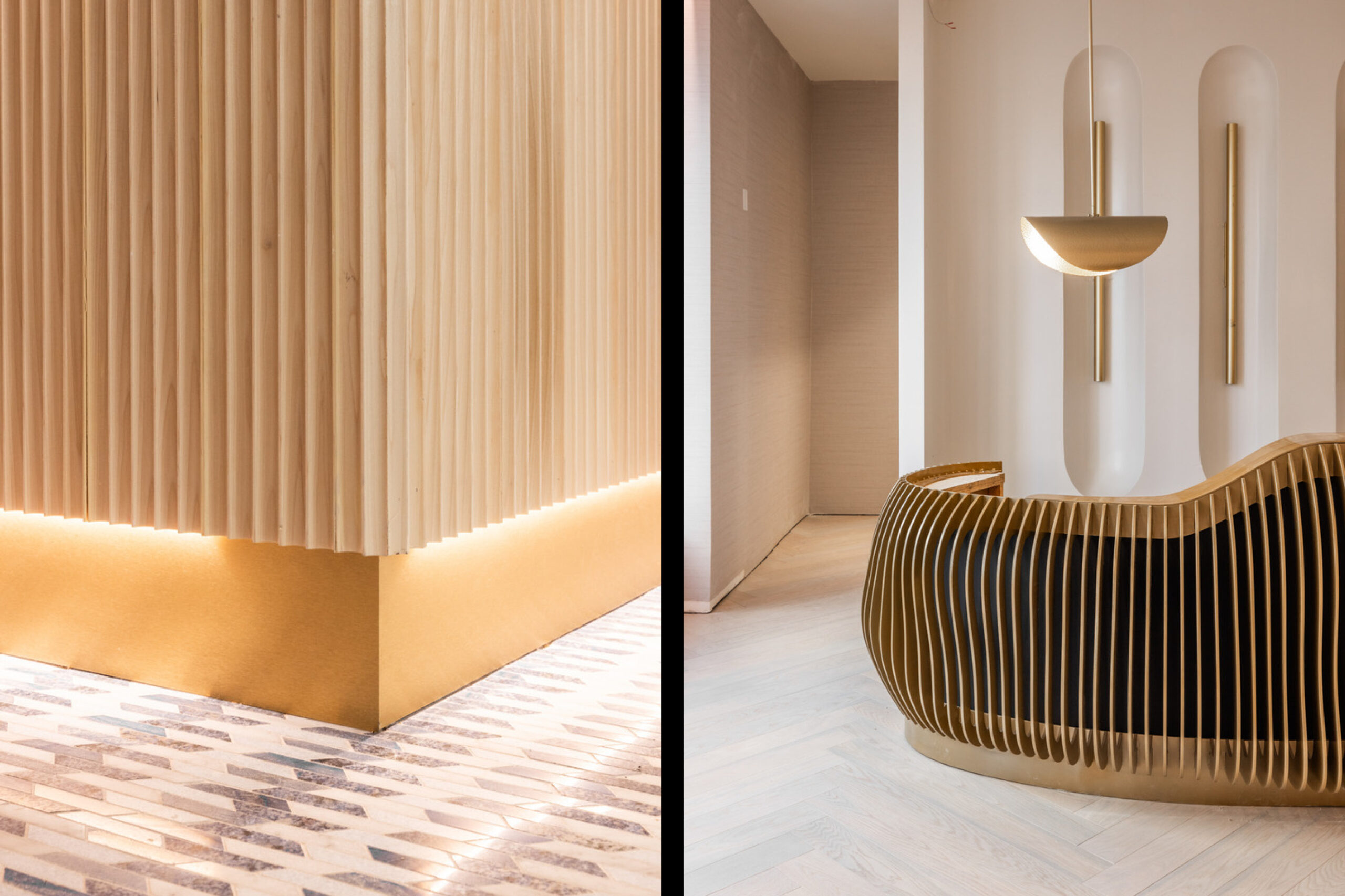
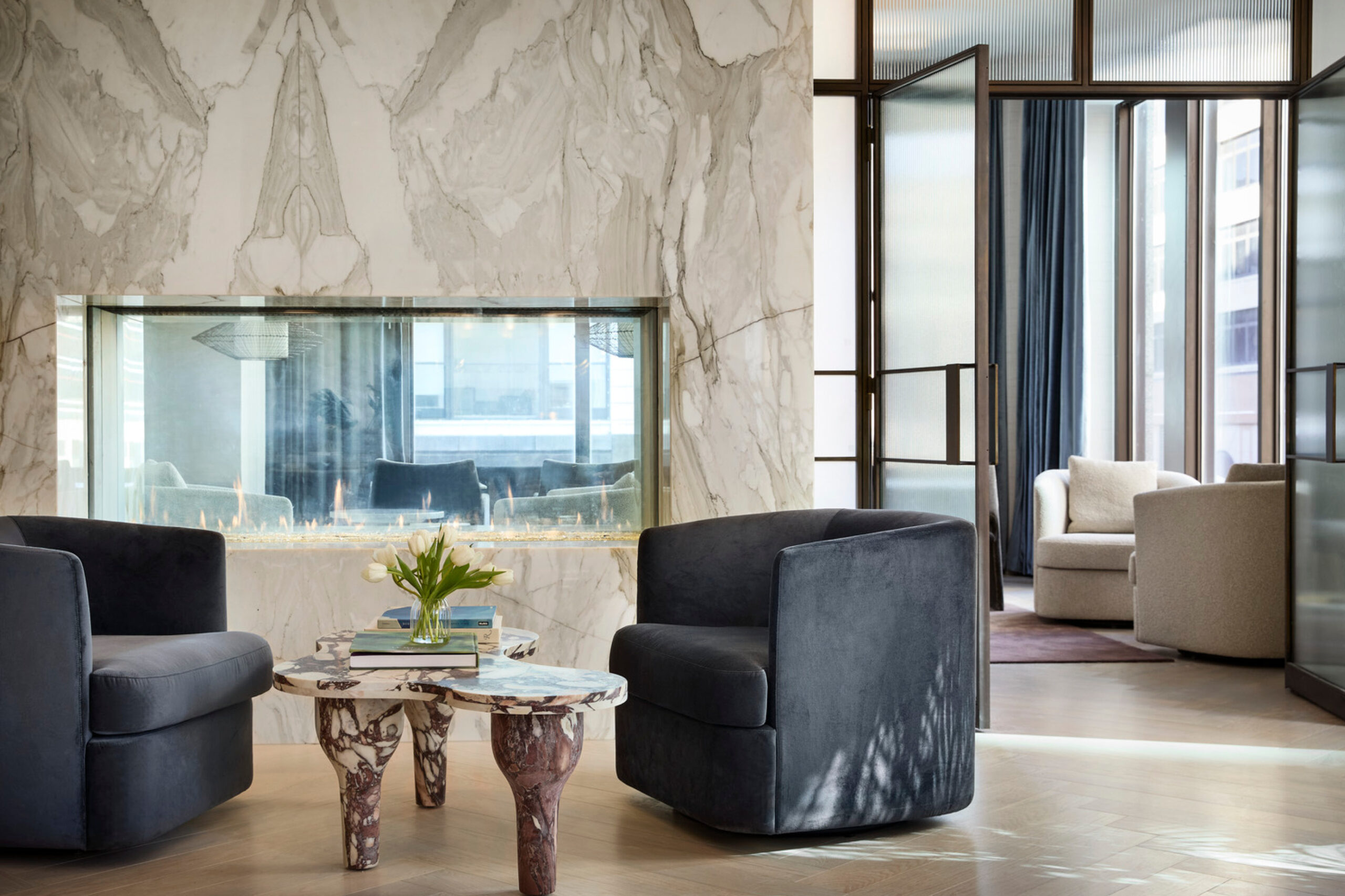
1926 Neo-Classical landmark reimagined
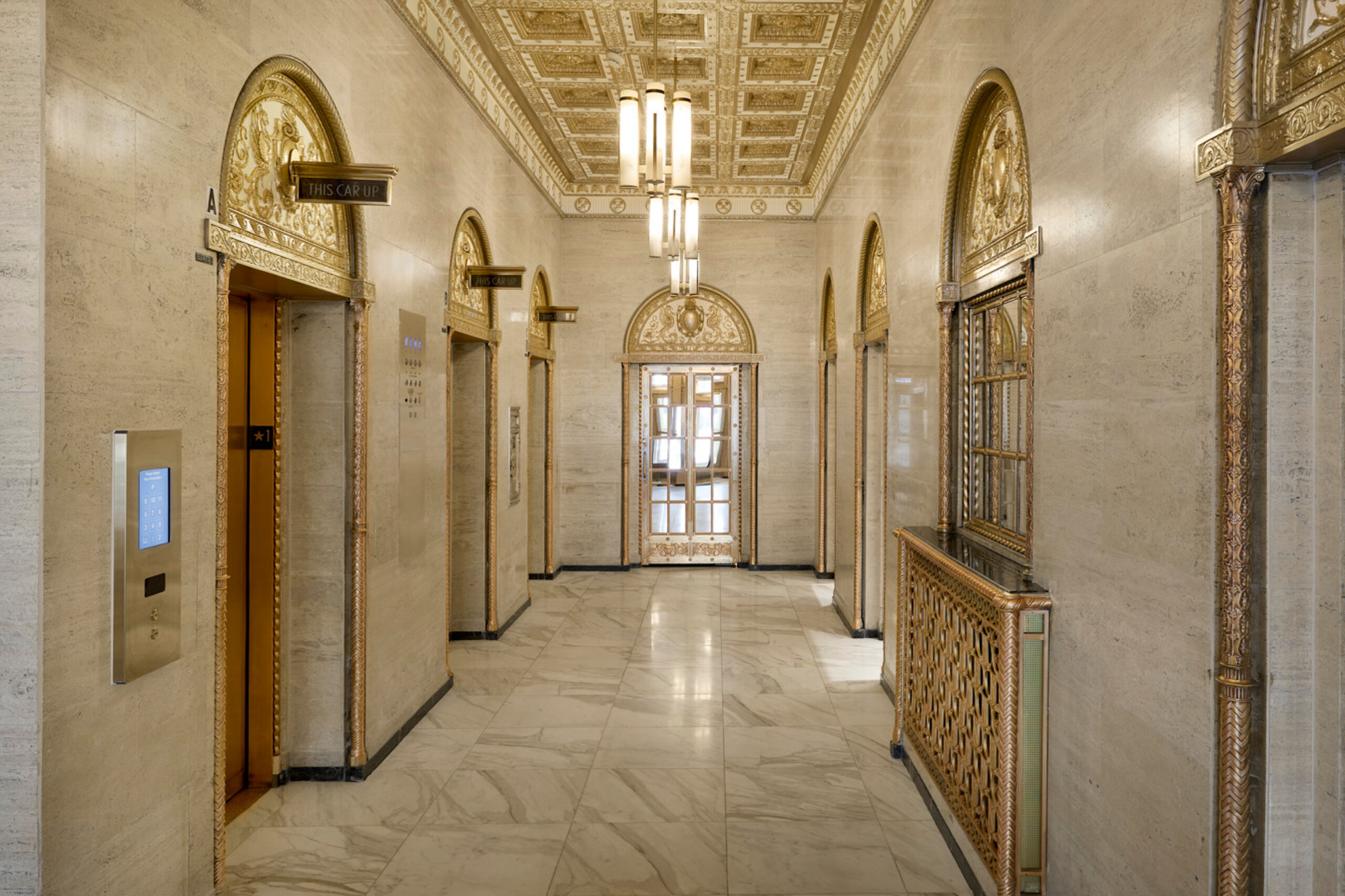
Materiality drives the experience. Marble, brass, and gold accents echo the building’s original palette, while layered textures, custom lighting, and sculptural furnishings introduce warmth and intimacy. These spaces evolve throughout the day and support both casual use and elevated social experiences.
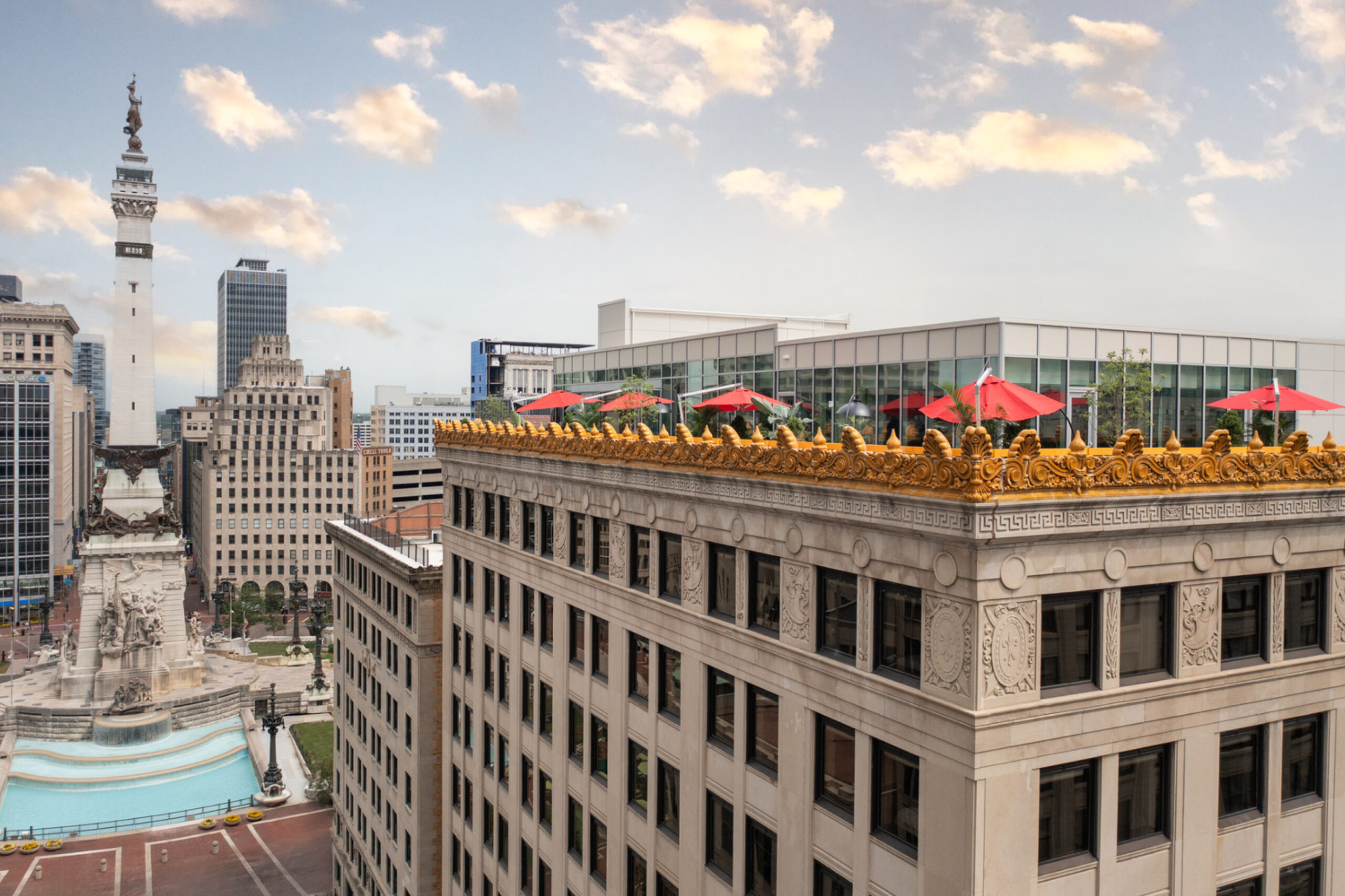
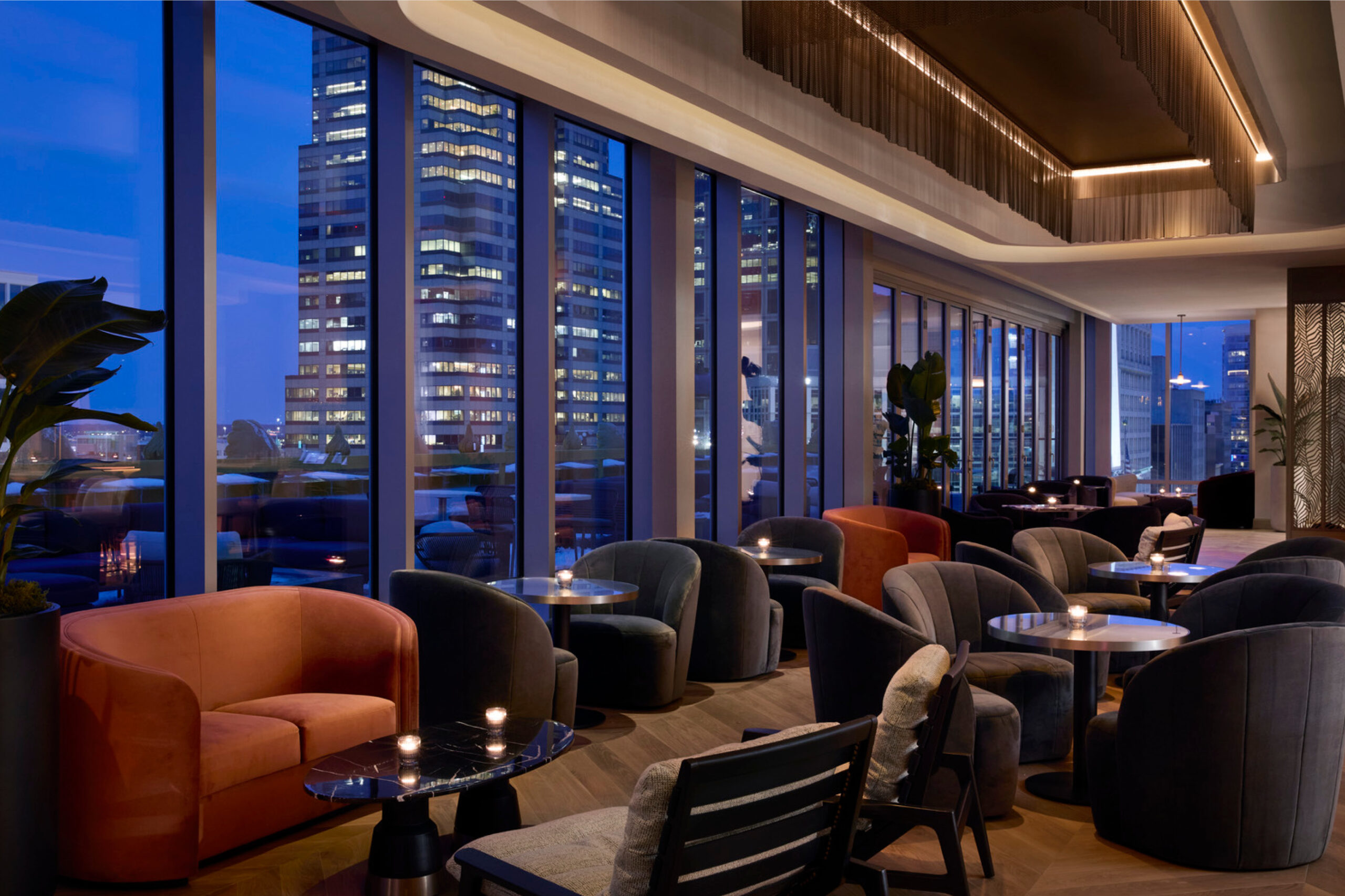
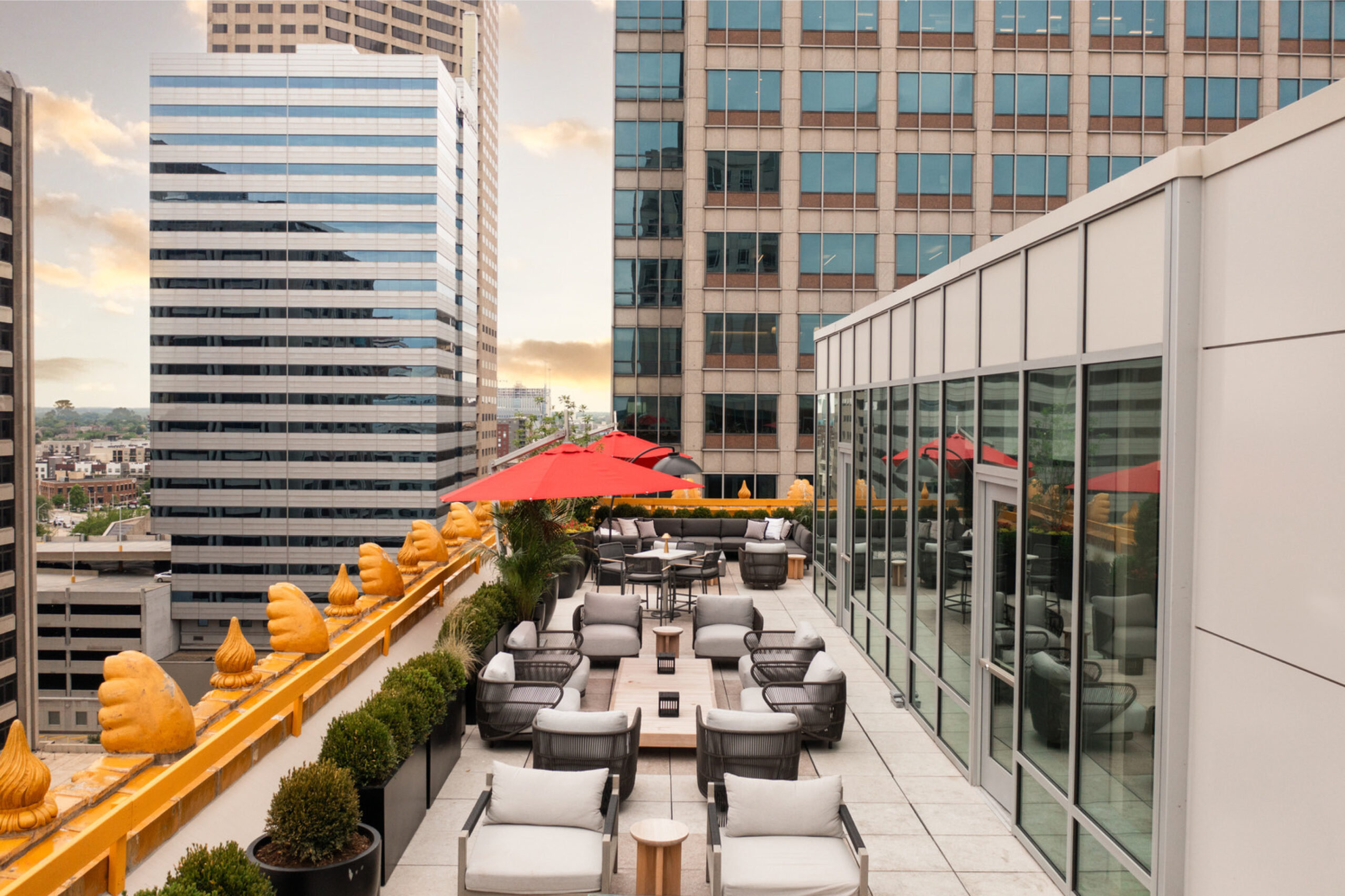
Rooftop destination overlooking city icons
At the rooftop level, Astrea offers a contrasting expression that is light-filled, open, and outward-facing. A retractable glass wall dissolves the boundary between interior and exterior and frames views of Monument Circle and the State House. The space supports a dynamic shift from early evening gathering to late-night destination.
Together, these spaces demonstrate how interior architecture and programming can shape identity and activation, transforming a historic structure into a layered, contemporary civic destination.